Building a Household Budget for Beginners: A brief guide to make budgeting easy.
Sarah White
4 Min Read
Money & Budgeting

Budgeting is a tool everyone should learn to use. At its core, it is a way to make sure you have enough money for monthly expenses. There are other ways to use a budget, though. You can use your budget to track your spending and cut down on things you may not necessarily use or need. You can also set budget goals to save for things like higher education for you or your children, emergency funds, retirement, or whatever financial or personal goal you want to achieve with your income.
If you find yourself running out of money every month before your next paycheck, or having to sacrifice paying late fees on a bill so you can provide for you and your family, starting to budget is a way to track income and spending so running out of money is not another stressor of everyday life.
Let’s start with the basics of creating a simple budget. First, you need to calculate how much money you make per month. Once you have that number, you can subtract the expected bills. After that, subtract groceries, fuel, child care, and whatever other things you consistently spend money on per month. You should also be saving for retirement, whether it is a Roth IRA, or a standard 401k. These are saving tools that grow your investment over time. Planning out your monthly expenses is key to not running out of money, but also to save some and put it away for a different use.
Budgeting is a tool everyone should learn to use. At its core, it is a way to make sure you have enough money for monthly expenses. There are other ways to use a budget, though. You can use your budget to track your spending and cut down on things you may not necessarily use or need. You can also set budget goals to save for things like higher education for you or your children, emergency funds, retirement, or whatever financial or personal goal you want to achieve with your income.
If you find yourself running out of money every month before your next paycheck, or having to sacrifice paying late fees on a bill so you can provide for you and your family, starting to budget is a way to track income and spending so running out of money is not another stressor of everyday life.
Let’s start with the basics of creating a simple budget. First, you need to calculate how much money you make per month. Once you have that number, you can subtract the expected bills. After that, subtract groceries, fuel, child care, and whatever other things you consistently spend money on per month. You should also be saving for retirement, whether it is a Roth IRA, or a standard 401k. These are saving tools that grow your investment over time. Planning out your monthly expenses is key to not running out of money, but also to save some and put it away for a different use.
Planning out your monthly expenses is key to not running out of money, but also to save some and put it away for a different use.
Planning out your monthly expenses is key to not running out of money, but also to save some and put it away for a different use.
Understanding what you spent money on the previous month will help you better plan and understand what you spend your money on for the next month. Depending on your financial goals, your budget will change from month to month as you choose what money you want to add back into the budget.
This may sound like a lot of work, but it will help you save money for the future while potentially taking away the stress of late fees that only take away more of the money you could save and put towards the goals you may have for yourself.
To make this process successful, you really have to account for all of your spending. Even though a rough idea of what you spend your money on is helpful, knowing exactly what you spend every month is important to tweak your spending so you know what you are willing to spend money on, what you have to spend money on, and what you do not need.
Here is an example. Let’s say your income is $2,000 per month. Your electric bill is $50, water is $30, and gas is $20; rent is $800, car insurance is $100, and health insurance is $100. These are bills you have to pay, so you are left with $900 for groceries, child care, gasoline, or subscriptions. If you spend $200 on groceries, $100 on child care, and $200 on gasoline, you have $400 for subscriptions, dining out, and whatever non-essential expenses you may have. If you make your budget and the final number is less than what you make per month, you will need to cut some of the non-essential spending until you have fine-tuned a budget that works for you.
Sacrificing the money you may have spent on dining out, subscriptions, or entertainment may be difficult at first, but once your budget has been tuned towards your needs and wants, you can start adding money back in for those kinds of expenses.
Understanding what you spent money on the previous month will help you better plan and understand what you spend your money on for the next month. Depending on your financial goals, your budget will change from month to month as you choose what money you want to add back into the budget.
This may sound like a lot of work, but it will help you save money for the future while potentially taking away the stress of late fees that only take away more of the money you could save and put towards the goals you may have for yourself.
To make this process successful, you really have to account for all of your spending. Even though a rough idea of what you spend your money on is helpful, knowing exactly what you spend every month is important to tweak your spending so you know what you are willing to spend money on, what you have to spend money on, and what you do not need.
Here is an example. Let’s say your income is $2,000 per month. Your electric bill is $50, water is $30, and gas is $20; rent is $800, car insurance is $100, and health insurance is $100. These are bills you have to pay, so you are left with $900 for groceries, child care, gasoline, or subscriptions. If you spend $200 on groceries, $100 on child care, and $200 on gasoline, you have $400 for subscriptions, dining out, and whatever non-essential expenses you may have. If you make your budget and the final number is less than what you make per month, you will need to cut some of the non-essential spending until you have fine-tuned a budget that works for you.
Sacrificing the money you may have spent on dining out, subscriptions, or entertainment may be difficult at first, but once your budget has been tuned towards your needs and wants, you can start adding money back in for those kinds of expenses.

Conclusion
Budgeting for your future should not be a chore. It is a tool everyone can use to keep track of their income and expenses to save for the future.
Blogs
Check Out Other Articles
Discover how our powerful tools make managing money simpler, faster, and smarter.
Blogs
Check Out Other Articles
Discover how our powerful tools make managing money simpler, faster, and smarter.
Blogs
Check Out Other Articles
Discover how our powerful tools make managing money simpler, faster, and smarter.



Build a Stronger Future for Your Family
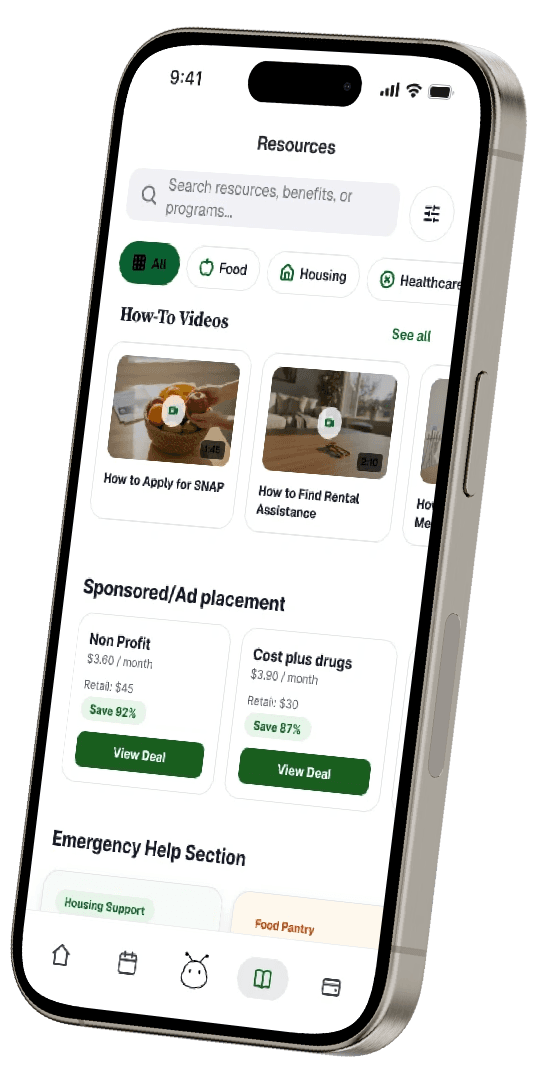
Help The Hive brings practical support into one simple platform helping households make confident decisions today while building greater stability for tomorrow.
Free to Use
Built for Real Households
Helpful Resources in One Place

Build a Stronger Future for Your Family
Help The Hive brings practical support into one simple platform helping households make confident decisions today while building greater stability for tomorrow.
Build a Stronger Future for Your Family
Help The Hive brings practical support into one simple platform helping households make confident decisions today while building greater stability for tomorrow.